City water in Mount Vernon is treated to meet safety standards before it reaches your tap. Still, many homeowners notice a chlorine taste, cloudy ice, or spots on their dishes. A reverse osmosis system is one of the most thorough ways to improve the water you drink and cook with.
Here is what reverse osmosis is, how it works, and how to know whether your home would benefit from one.
What Is Reverse Osmosis?
Reverse osmosis, or RO, is a filtration process that pushes water through a semipermeable membrane. The membrane has openings small enough to let water molecules through while holding back many dissolved solids and contaminants. The filtered water goes to a storage tank, and the rejected material is flushed down the drain.
How a Home RO System Works
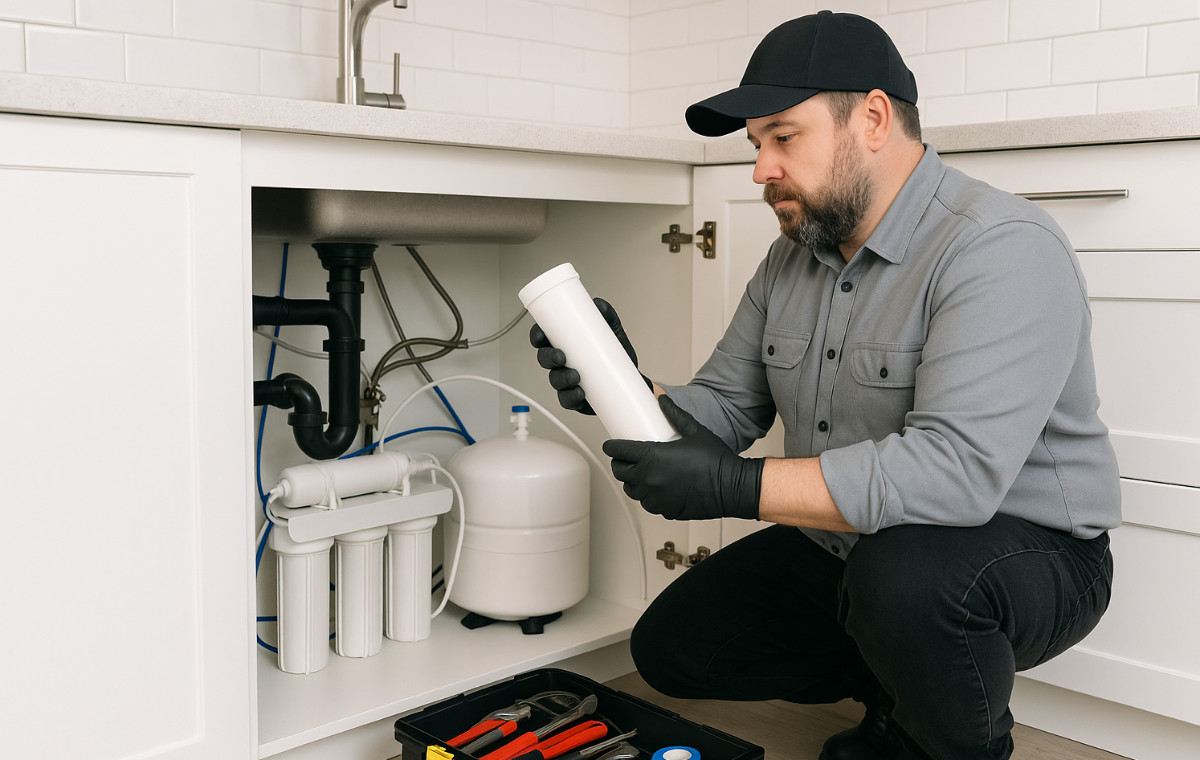
Most residential RO systems install under the kitchen sink and use several stages:
- A sediment filter catches sand, rust, and other particles.
- A carbon filter reduces chlorine, which protects the membrane and improves taste.
- The RO membrane removes dissolved solids and many contaminants.
- A storage tank holds filtered water so it is ready when you need it.
- A final carbon filter polishes the water before it reaches a dedicated faucet.
Some systems also include a remineralization stage that adds back calcium and magnesium for taste.
What Does Reverse Osmosis Remove?
A properly maintained RO system can reduce:
- Chlorine taste and odor
- Total dissolved solids (TDS)
- Lead and other heavy metals
- Fluoride
- Nitrates and sulfates
- Many PFAS compounds
- Sodium, including sodium added by a water softener
Results depend on the system and the membrane, so look for units certified to NSF/ANSI Standard 58.
Signs Your Home Could Benefit From an RO System
You may want to consider reverse osmosis if:
- Your tap water tastes or smells like chlorine
- You buy bottled water for drinking and cooking
- Coffee, tea, or ice cubes taste off
- Your home has older plumbing and you are concerned about lead
- You use a water softener and want lower-sodium drinking water
- Someone in your home has a health concern that calls for cleaner drinking water
Do You Need Reverse Osmosis If You Have City Water?
Municipal water is tested and treated, so it meets federal drinking water standards when it leaves the treatment plant. On the way to your tap, it can still pick up sediment or lead from older service lines and household plumbing. Disinfectants like chlorine also change how water tastes and smells.
An RO system is not a requirement for city water. It is an upgrade for homeowners who want better-tasting water, an extra layer of protection, or a way to stop buying bottled water. A water test can show what is in your water and help you decide whether RO, whole-home filtration, or both make sense.
Reverse Osmosis vs. Whole-Home Filtration
An RO system usually treats water at one point of use, like the kitchen sink. A whole-home water filtration system treats all the water entering your home, including showers, laundry, and appliances.
Many homeowners pair the two. A whole-home system improves water quality everywhere, and an under-sink RO unit provides the highest-quality water for drinking and cooking. If hard water is causing scale on fixtures, a water softener works alongside both.
What to Know Before You Install RO
Reverse osmosis is effective, but a few details matter:
- Space. The filters and tank need room under the sink.
- Wastewater. RO systems send some water to the drain during filtration. Newer models are more efficient.
- Water pressure. Low household pressure can slow filtration. A booster pump may be needed.
- Maintenance. Pre-filters need regular changes, and the membrane needs periodic replacement.
- Minerals. RO removes beneficial minerals along with contaminants. A remineralization filter can add them back.
How to Maintain Your RO System
Regular maintenance keeps an RO system filtering well:
- Replace sediment and carbon pre-filters as the manufacturer recommends, often every 6 to 12 months
- Replace the RO membrane every two to three years
- Sanitize the storage tank and lines when you change filters
- Watch for slower flow or a change in taste, which can signal a clogged filter
- Check under the sink for drips around fittings and the drain connection
Choosing the Right RO System
Not every RO system is the same. When comparing options, look at:
- Certification. NSF/ANSI 58 certification confirms the system’s performance claims.
- Capacity. Gallons per day should match how much water your household drinks and cooks with.
- Efficiency. A lower waste ratio means less water sent to the drain.
- Tank vs. tankless. Tankless RO units save space under the sink and deliver water on demand.
- Faucet style. The dedicated faucet should fit your sink and match your fixtures.
Professional RO Installation in Mount Vernon, WA
An RO system needs a proper connection to your cold water line, your drain, and a dedicated faucet. Professional installation helps prevent leaks under the sink and makes sure the system is sized for your household.
CPI Plumbing, Heating, Cooling & Electrical helps Mount Vernon and Skagit County homeowners choose and install the right water treatment for their homes. Learn more about our plumbing services or call 360-822-9306 to talk with a plumber about reverse osmosis.